
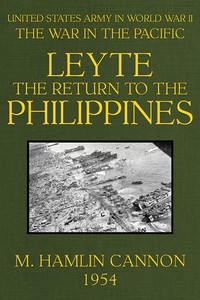
Leyte: The Return to the Philippines by M. Hamlin Cannon
M. Hamlin Cannon’s book tells the story of a huge, two-part fight in late 1944. General Douglas MacArthur made good on his famous promise to return to the Philippines, and the island of Leyte was where he landed. But the Japanese were determined to stop him at all costs.
The Story
The book splits its time between the chaotic battle on land and the even bigger one at sea. On Leyte, American soldiers found themselves in a tough spot. The terrain was awful—thick jungle, endless rain, and mountains the enemy used as natural fortresses. Progress was slow and costly. Meanwhile, out in the Philippine Sea, the Japanese Navy launched its last major offensive. They planned a complex attack to destroy the American invasion fleet. This led to the Battle of Leyte Gulf, a series of massive naval clashes. Cannon shows how mistakes, bravery, and sheer luck decided the outcome. In the end, the Japanese fleet was shattered, but the fighting on Leyte dragged on for months in what he calls a 'miserable, muddy stalemate.'
Why You Should Read It
What makes this book stand out is how it connects the big picture to the personal experience. You get the high-level strategy from commanders like Halsey and Kurita, but you also feel the exhaustion of the infantryman sleeping in a water-filled foxhole. Cannon doesn’t shy away from the confusion of war. Plans fall apart, messages get misread, and sometimes survival comes down to chance. He makes you understand that this victory wasn’t clean or easy. It was a messy, brutal grind that tested everyone involved. Reading it, you gain a real respect for the sheer scale and difficulty of the campaign, something that often gets lost in simpler summaries.
Final Verdict
This is a perfect pick for anyone who wants to go deeper into the Pacific War beyond the well-known battles like Midway or Iwo Jima. It’s for readers who enjoy military history that feels immediate and human, not just a list of dates and troop movements. While it’s detailed, Cannon’s writing is clear and direct, so you won’t get lost. If you’ve ever wondered what it actually took to fulfill MacArthur’s 'I shall return' pledge, this book gives you the intense, complicated, and ultimately triumphant answer.
There are no legal restrictions on this material. It serves as a testament to our shared literary heritage.
Ava Johnson
1 year agoSimply put, it challenges the reader's perspective in an intellectual way. Truly inspiring.
Deborah Lewis
11 months agoCitation worthy content.









Oliver Gonzalez
9 months agoFive stars!