
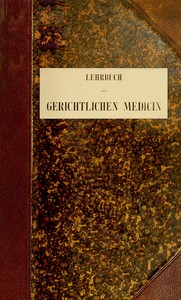
Lehrbuch der Gerichtlichen Medicin by Ritter von Eduard Hofmann
Let's be clear from the start: Lehrbuch der Gerichtlichen Medicin is a technical manual. Published in multiple editions in the late 1800s, it was written by Eduard von Hofmann, a preeminent Austrian forensic pathologist, to teach doctors and legal professionals the science of investigating death.
The Story
There isn't a narrative plot with characters. Instead, the 'story' is the systematic process of forensic inquiry itself. Hofmann walks the reader through the entire procedure of a death investigation. He starts with the scene: what to look for, how to document everything. Then comes the autopsy—the meticulous examination of the body to find cause of death. He details how to distinguish a knife wound from a gunshot, how to recognize the signs of strangulation or drowning, and how to detect various poisons through chemical tests. A huge part of the book is dedicated to timing: using body temperature, rigor mortis, and insect activity to estimate when death occurred. It's a step-by-step guide to building a fact-based case, separating guesswork from evidence.
Why You Should Read It
Reading this book is a unique experience. The prose is formal and precise, a product of its time, but the content is startlingly direct. You're getting an unfiltered look at the foundational principles of a field we now take for granted. What captivated me was the mindset. This was written before DNA, before digital databases. Hofmann's world relied on sharp observation, careful measurement, and logical deduction. You see the early struggles—like trying to definitively prove a death was a suicide, or determining if a newborn was killed or stillborn. It highlights how far we've come, but also how many core questions remain the same. It’s less about gory details and more about the profound responsibility of seeking truth from silent evidence.
Final Verdict
This book is not for everyone. It's a specialized historical document. But if you're a true crime enthusiast who wants to understand the roots of forensic science, a history buff interested in 19th-century medicine and law, or a writer researching authentic period procedures for a mystery novel, this is a treasure trove. It requires patience, but it rewards you with a deep, authentic understanding of how science first entered the courtroom. Think of it as the essential, if challenging, prequel to everything that came after.
This work has been identified as being free of known copyright restrictions. You can copy, modify, and distribute it freely.
Christopher Gonzalez
1 year agoThe fonts used are very comfortable for long reading sessions.






Donna Jackson
2 months agoAmazing book.